R2 Advisors

Rose Araghchy, CPA

Founder, President and CEO of R² Advisors

I founded R² around a straightforward belief: leaders deserve financial information they can understand, trust and use when the decisions carry real consequences.

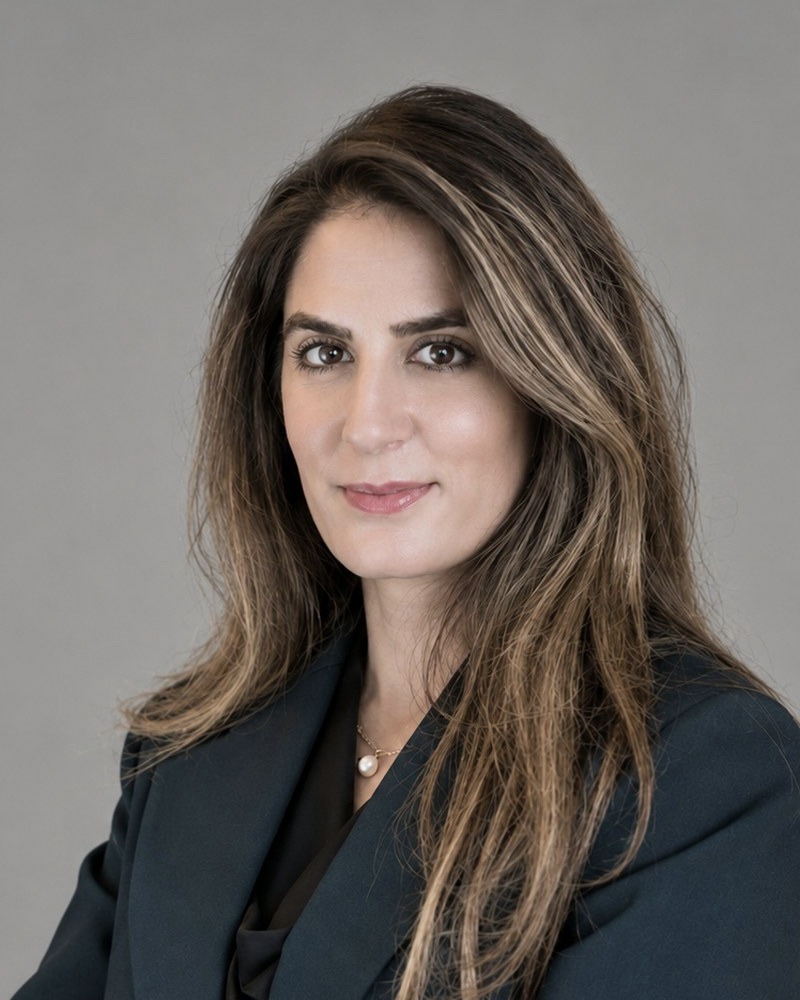
Rose Araghchy, CPA, founder, president and CEO of R² Advisors

Rose Araghchy, CPA, is the founder, president and CEO of R² Advisors, a CPA-led financial advisory firm based in McLean, Virginia. Her work focuses on financial control, tax strategy, financial transformation and decision-ready financial systems for complex organizations.

I work with organizations whose growth and operating complexity have outpaced the financial structure supporting them. My approach combines technical discipline with direct communication, human judgment and a willingness to stay with the problem until the financial picture makes sense.

Why I built R² AdvisorsPress & recognition

A note from Rose

Why I built R² Advisors

You can have good people working on your finances and still struggle to get a clear answer about where your organization stands. The accountant has one part of the picture. The tax adviser has another. Your internal team knows things neither of them sees. Bringing it together becomes another responsibility for the person leading.

That gap is why I built R² Advisors.

A report can be accurate and still leave an important question unanswered. Can we afford this commitment? Why is cash tight when the results look strong? What are we missing?

Those questions reach well beyond the person making the decision. Employees are building their lives around a paycheck. Investors and funders are trusting an organization to use their money well. Customers and communities depend on it keeping its commitments.

That larger responsibility is part of why I wanted to build this firm. Helping an organization become financially stronger gives it a better chance of sustaining the work people count on, through difficult periods as well as good ones.

I wanted to build a team that would take responsibility for helping people work through those questions. People who get to know the organization, talk with those doing the work and stay involved when an answer takes more digging.

Accounting is the language of business, but nobody should have to become an accountant to understand what is happening in the organization they lead. We should be able to explain it clearly, including where we disagree, what we have yet to resolve and how it affects the choices ahead.

That is also how we want the relationship to feel. You can tell us an explanation does not make sense. You can ask us to walk through it again. You can bring us a concern before you know exactly how to put it into words.

We will not always have an immediate answer. You should be able to trust that we are paying attention, asking the right people and following through.

That is the kind of firm I wanted to build, and the work our team takes responsibility for every day.

Rose

A few things the work has taught me

The hardest parts of financial work are not always technical. These are the patterns I keep seeing, in organizations of very different kinds.

  • The numbers are rarely the whole problem

    When a leader tells me the reporting is wrong, the arithmetic is usually fine. What is missing is anyone responsible for whether the whole picture makes sense. Errors tend to live in the space between specialists rather than inside their work.

  • Certainty is not the same as confidence

    The most confident teams I work with are the ones that can say plainly what they do not yet know. Naming the gap is what lets you plan around it. Pretending it is not there is what makes it expensive later.

  • Changing your mind is part of the job

    Financial structures age. Something that fit the organization three years ago can quietly stop fitting it, without anyone doing anything wrong. The useful question is not whether the decision was right then, but whether it still holds now.

The perspective I bring

Moving between public service, a global firm, teaching and building R² taught me that technical correctness is only the beginning. People need an answer they can understand, question and use.

Working across languages and cultures has also made me attentive to what gets lost between specialists, systems and assumptions. I try to make the work rigorous without making it remote, and to leave room for a better answer when the evidence changes.

Financial control is not one report. It is the discipline that makes the financial reality trustworthy.

In my experience, financial information becomes dependable when the records, responsibilities, reviews and evidence all support the decisions leadership needs to make. I work with leadership teams navigating the interaction of contracts, labor, entities, locations, systems, cash, tax obligations and external scrutiny. My focus is not simply producing financial information. It is determining whether that information can be understood, reconciled and used responsibly when the decision carries real consequences.

At R², that perspective shapes our approach to Managed Financial Control, financial transformation, strategic tax and financial governance.

Where my work is concentrated

Applied across R²’s operating environments, including government contractors.

  • Financial control

    Establishing reliable accounting records, reporting, cash visibility, financial governance and decision-ready management information. I lead R²’s approach to Managed Financial Control, the firm’s recurring relationship for organizations that need more than completed accounting tasks.

    Explore Managed Financial Control
  • Finance transformation

    Designing the operating structure, systems, responsibilities and controls required when an organization’s complexity has outgrown its financial infrastructure.

    Explore Financial Transformation & Implementation
  • Strategic tax governance

    Connecting tax compliance, planning, partnership taxation, tax credit planning, cash consequences, entity decisions and professional judgment rather than treating tax as an isolated annual event.

    Explore Tax Strategy & Compliance
  • Professional judgment and governance

    Establishing clear responsibility for evidence, review, decisions and financial conclusions.

    Explore Risk & Governance

Selected thinking and commentary

Private Funds CFO · Commentary

Why AI really is a game changer

Rose contributed commentary to Private Funds CFO’s examination of how finance leaders are using AI-enabled tools in their work. Her view is that those tools can increase research and analytical capacity, while evidence, review and responsibility for the conclusion remain with the professional.

Read on Private Funds CFO (opens in a new tab)
  • Blue J · Case study

    Scenario analysis for high-stakes tax advisory

    Blue J published a case study describing how R² uses citation-backed tax research to examine multiple scenarios in complex advisory work. Reported results belong to Blue J, and individual client outcomes vary.

    Read the Blue J case study (opens in a new tab)

The right conversation usually begins with what changed.

If the financial structure supporting your organization no longer reflects the complexity of its responsibilities, operations or decisions, tell us what changed. We will listen carefully, clarify what appears to be happening and determine whether R² is the right fit.